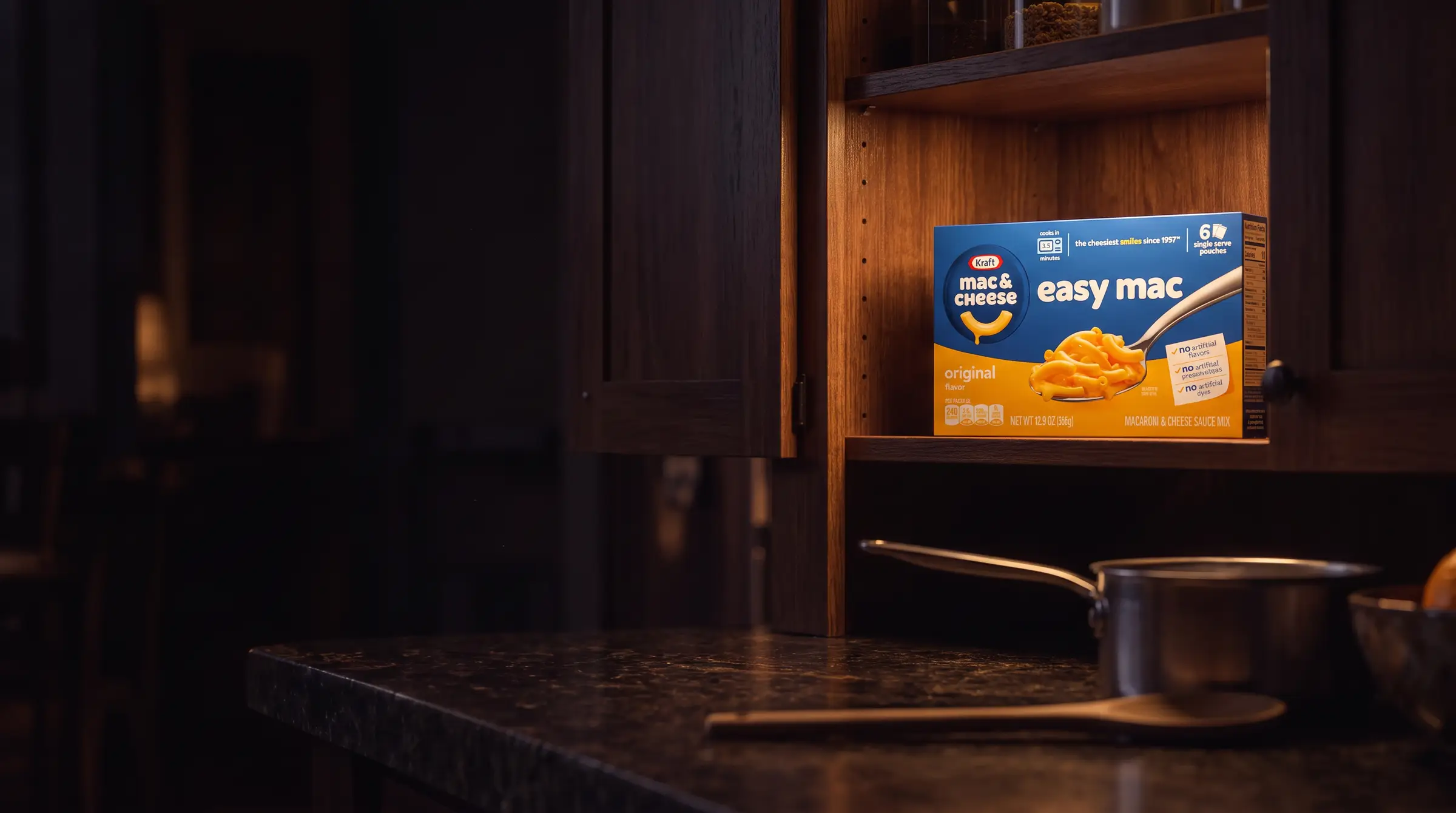
The short answer
Cognitive shortcuts are the quick rules the mind uses to decide without thinking a choice through: go with what feels familiar, what comes to mind first, what other people seem to choose, what looks like quality. In brand choice, cues set them off: a color, a shape, a character, a sound or a phrase that the mind already links to a story. We call these cues triggers. A brand grows fastest by linking itself to associations people already hold, because adding to an existing memory works faster than building a new one. The same mechanism works against a brand when one of its cues carries a negative story.
Why the mind takes shortcuts
Thinking every choice through would be exhausting. So the mind decides most things the fast way, on autopilot, and keeps slow, careful thinking for the few choices that seem to need it. Psychologists call the fast way System 1. See behavioral science and System 1 in marketing.
Brand choices are almost always the fast kind. A shopper facing a shelf of near-identical products doesn’t weigh them up. The hand goes to the one that feels right, and the feeling comes from a shortcut.
The shortcuts that shape brand choice
| Shortcut | What the mind does | What it means for a brand |
|---|---|---|
| Familiarity | Treats what it recognizes as safer | Be recognized in an instant, and keep the cues people know you by |
| First to mind | Picks the option that comes to mind most easily | Grow salience, not only awareness |
| Other people’s choices | Follows what others seem to choose | Show the brand being chosen and used |
| Price as a signal | Reads a higher price as higher quality | Constant discounts can teach buyers the brand is worth less |
| Halo | Lets one strong positive color everything else | One strong association can lift the whole brand |
| Habit | Repeats what worked last time | Incumbents are favored, so a challenger needs a cue that breaks the pattern |
How a brand cue becomes a shortcut
Shortcuts are set off by cues. When a cue is tied to a brand, it carries the brand’s story with it, and the mind reads the story in an instant, without an argument. We call ourselves Triggers because triggers are the cognitive shortcuts that shape brand choice.
- Visual triggers: a color, a shape, a pack, a character, a setting.
- Verbal triggers: a word, a name, a line, a sound people already link to an idea.
This is why triggers work faster than claims. A claim asks the conscious mind to believe something new, and it pushes back.
“And so persuasion takes a very long time to work, doesn’t work very well. It’s gonna get a lot of resistance.”
Piggybacking: build on memories people already have
The fastest way to give a brand a new association is to link it to one people already hold, rather than teach them something from scratch. Leslie Zane calls this piggybacking: attaching the brand’s message to an idea that already exists in the brain.
“Adding onto existing memories always works faster than starting from scratch.”
In practice, that means finding the positive associations your brand already owns, and the ones people already hold about the benefit you offer, then building the new message on top of them.
When a shortcut works against you
A cue carries whatever story the mind has attached to it, good or bad. Leslie Zane used a public example. After a TV series showed a well-known character having a heart attack following a Peloton workout, the brand answered with an ad that featured the same character. The ad’s message was positive. The cue was not.
“The linkage already exists in our brains which means that their ad is actually reinforcing those negative associations instead of taking them down.”
The lesson applies to every brand: before you use a cue, check what it is already linked to in people’s minds.
How to make shortcuts work for your brand
- Find the cues people already use to recognize your brand, and the associations attached to each.
- Keep the cues that work. Change them only with care, because every reset spends recognition the brand already built.
- Build new messages on top of associations people already hold, instead of asking them to learn something new.
- Remove cues that carry a negative story, even when the message around them is positive.
- Check each cue against your competitors. A shortcut that points to them helps them, not you.
In pharma and health care, cues shape which brands come to mind. They never replace the evidence on efficacy and safety.